Best overall: printed banners. Best for portable setups: retractable banner displays. Best for product explanations: rigid display boards. The best large format printing for trade shows in 2026 matches your message to the space; Image Monster is best for Wilmington businesses seeking local, in-house design and production.
- Printed banners are the best large format printing for trade shows when you need a clear booth message.
- Retractable banner displays suit portable setups; rigid display boards suit product explanations.
- Fabric backdrops suit coordinated booth walls; adhesive graphics suit approved counters and fixtures.
- Image Monster offers Wilmington businesses in-house design and production, backed by over 25 years in business.
Why this matters
Your trade show graphics have different jobs. A backdrop identifies your business, a product board explains an offer, and a counter graphic connects the smaller surfaces to the main display. Asking one print to do everything creates a crowded layout.
For Wilmington and southeast North Carolina businesses planning 2026 events, start with the conversation you want to have. Choose the print format after you choose the message. A clear service description belongs ahead of decorative details.
What makes the best trade show printing?
Judge each format against these criteria before choosing a material or approving artwork:
- Message visibility: Can someone identify your business and understand the main offer without reading a paragraph?
- Physical fit: Does the graphic fit your booth, support hardware, and permitted display area?
- Setup effort: Can your team transport, assemble, and remove the display with the resources available?
- Artwork suitability: Will the design remain readable at its intended size and viewing position?
- Reuse: Can you keep using the graphic when an event, offer, or contact detail changes?
- Surface compatibility: For adhesive graphics, does the material suit the actual fixture and removal requirements?
Treat hardware and printed graphics as separate decisions. A banner needs a support plan, a fabric backdrop needs a compatible structure, and a rigid board needs a stable mounting method. Confirm those details before artwork reaches production.
Trade show printing options at a glance
| Rank and format | Best for | Standout feature | Key limitation |
|---|---|---|---|
| 1. Printed banners | A clear primary booth message | Flexible placement with suitable supports | Hanging and tension affect presentation |
| 2. Retractable banner displays | Portable setups | Graphic stores inside its base | Narrow layout limits detailed content |
| 3. Rigid display boards | Product explanations | Flat presentation for diagrams and images | Boards need protection during transport |
| 4. Fabric backdrops | Coordinated booth walls | Broad surface behind your team | Fabric and frame must work together |
| 5. Adhesive graphics | Counters and approved fixtures | Uses surfaces already in the booth | Adhesion and removal depend on the surface |
These are format recommendations, not a claim that every material or display system suits every order. Confirm the print material, finishing, support hardware, and installation requirements in your quote.
1. Printed banners: best for the main booth message
A printed banner gives your business a prominent place for its name, core service, and main visual. Use it behind your team or along an approved booth surface where visitors can see it without stepping around furniture.
For a 2026 event, build the layout around 1 headline per display. Put supporting details elsewhere rather than shrinking the headline to accommodate everything.
Printed banner pros:
- Flexible layouts for wide or tall display areas.
- Suitable for a focused brand or service message.
- Can remain useful across events with evergreen artwork.
Printed banner cons:
- A loose or uneven installation distracts from the design.
- An unsupported banner is not a complete display system.
- Dense text becomes difficult to scan from the aisle.
Best for: Businesses that need a clear main message and already know how the banner will be supported.
Specify the finished dimensions, mounting points, and indoor or outdoor use when requesting a quote. Do not assume a banner intended for one installation will fit another.
Verdict: Buy a printed banner for your primary message; settle the mounting plan before production.
2. Retractable banners: best for portable setups
A retractable banner display stores its graphic in a base and presents it upright when assembled. It suits a booth entrance, a presentation area, or a separate station that needs its own message.
The narrow shape rewards editing. Give the display a clear reading order: business identity, main benefit, then the next action. Keep essential information away from areas that furniture or people will regularly block.
Retractable banner pros:
- Combines the graphic and its storage base.
- Works as a standalone vertical display.
- Gives separate services or stations their own identity.
Retractable banner cons:
- The narrow format restricts wide diagrams and detailed comparisons.
- The base still needs clear floor space.
- Replacement graphics must match the relevant hardware specifications.
Best for: Teams that need a portable display for changing event layouts.
Ask whether your quote includes hardware, the printed graphic, and a carrying solution. If you own a stand, provide its specifications instead of assuming a new graphic will fit.
Verdict: Buy a retractable display for portability; skip it as the home for your entire sales presentation.
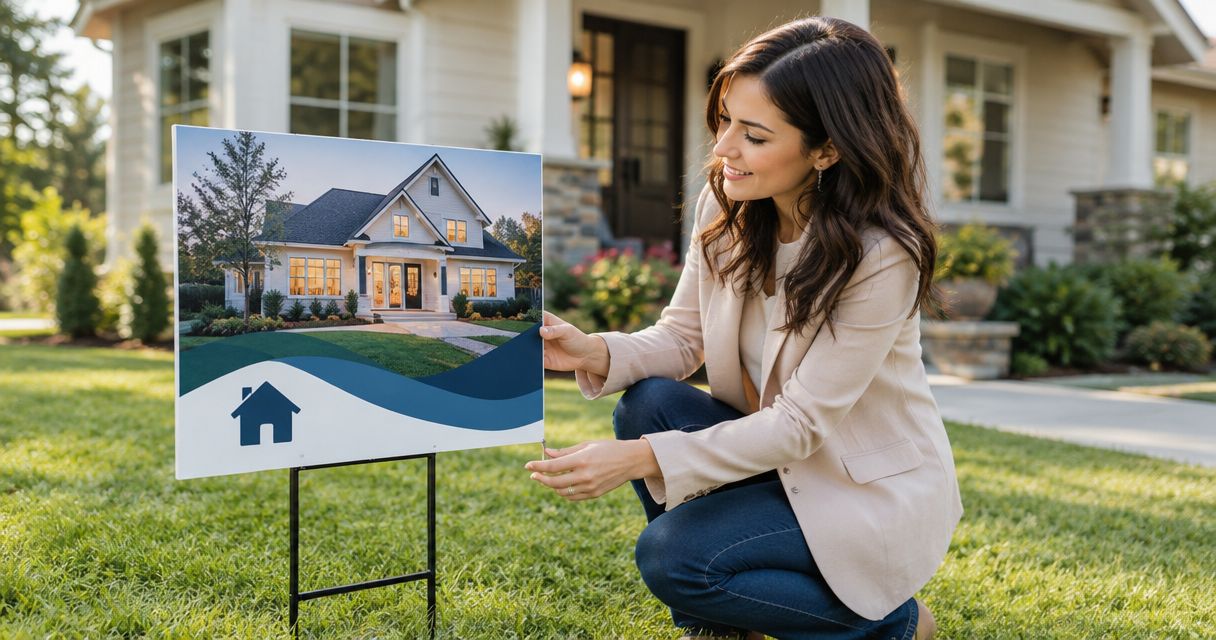
3. Rigid display boards: best for product explanations
Rigid boards provide a flat surface for product photographs, process diagrams, service comparisons, and demonstration instructions. Place them where visitors stop to look rather than where they pass quickly.
A board can answer a specific sales question while your team handles the conversation. Give each board a defined job, such as explaining a process or identifying the parts of a demonstration.
Rigid display board pros:
- Keeps diagrams and images on a flat surface.
- Separates detailed explanations from the main backdrop.
- Supports a focused presentation beside a product or sample.
Rigid display board cons:
- Corners and faces need protection in transit.
- Larger boards require a transport plan.
- Stands, easels, or mounting arrangements need separate attention.
Best for: Businesses explaining a product, process, or service at close range.
Choose the board material around its dimensions, support method, and handling requirements. Do not approve a material solely because it looks right in an artwork preview.
Verdict: Buy rigid boards for explanations; skip them when your main requirement is compact storage.
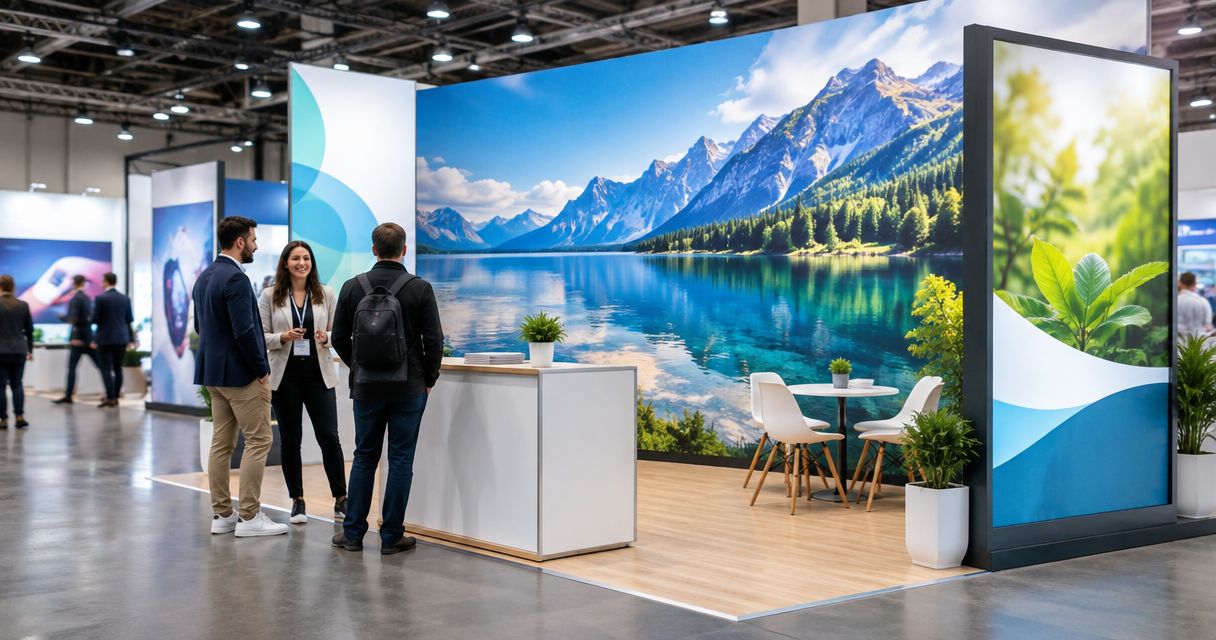
4. Fabric backdrops: best for coordinated booth walls
A fabric backdrop creates a broad printed surface behind your team. It suits a booth that needs a consistent visual background rather than several disconnected messages.
Keep the central artwork simple. Product tables, staff, and visitors occupy the foreground, so a backdrop should remain understandable when part of it is hidden.
Fabric backdrop pros:
- Provides a broad surface for a unified design.
- Can coordinate the background across a booth.
- Supports brand imagery without relying on several separate panels.
Fabric backdrop cons:
- Graphic dimensions must suit the intended frame.
- Packing and handling affect presentation.
- Repairs or replacements depend on the display system involved.
Best for: Businesses with a defined booth structure and a repeatable layout.
For your 2026 booth, confirm the frame dimensions and artwork template before design begins. Ask how the finished graphic should be packed, assembled, and cared for.
Verdict: Buy a fabric backdrop for a coordinated booth wall; wait until the frame specification is confirmed.
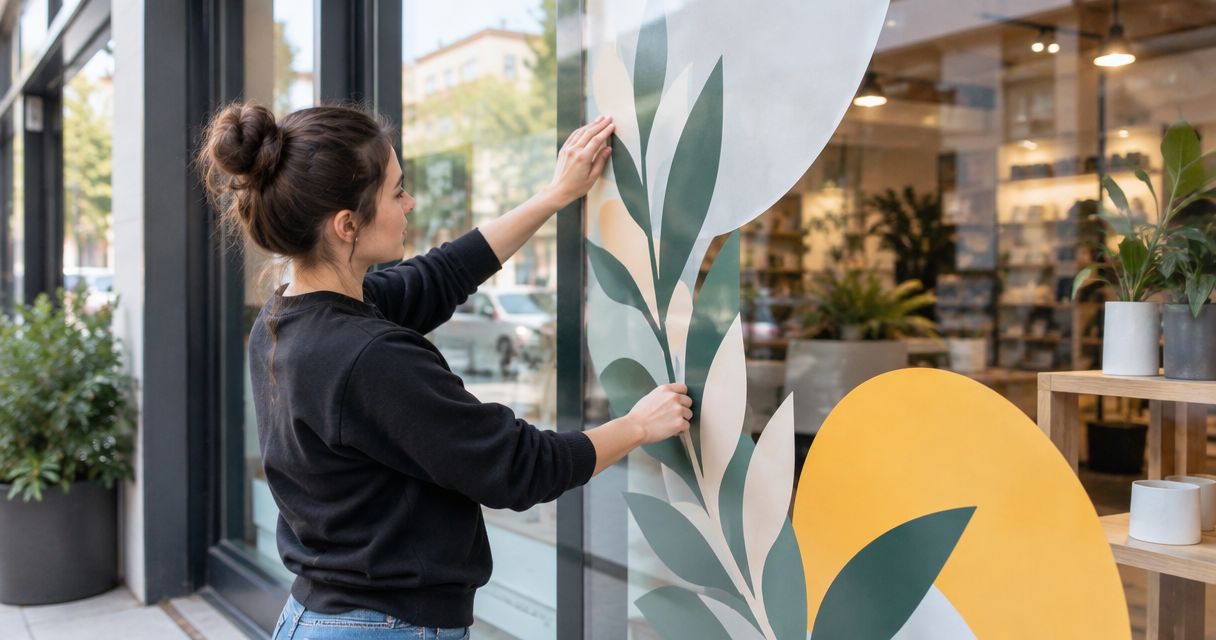
5. Adhesive graphics: best for counters and fixtures
Adhesive graphics apply your design to a compatible surface rather than creating a separate freestanding display. Use them on approved counters, panels, and fixtures that are part of your booth.
This format needs a surface-first decision. Painted panels, textured surfaces, and existing finishes do not all behave alike, and removal requirements belong in the brief from the start.
Adhesive graphic pros:
- Uses existing booth surfaces.
- Connects counter and fixture designs to the main display.
- Does not require a separate floor-standing structure.
Adhesive graphic cons:
- Material selection depends on the surface and finish.
- Removal needs advance planning.
- Rented fixtures require permission before application.
Best for: Businesses personalizing compatible, approved booth fixtures.
Tell the printer what the surface is, whether you own it, and whether the graphic must come off after the event. Never treat a rented counter as an unrestricted application surface.
Verdict: Buy adhesive graphics after confirming compatibility and permission; skip unapproved applications.
How these formats rank
The ranking puts the main booth message first, portability second, and more specialized display jobs after those. Printed banners lead because they address the primary communication task without requiring detailed product explanations.
This is a use-case ranking, not a material durability test. The right choice changes when your booth, hardware, or message changes. A portable display wins for a traveling representative; a rigid board wins beside a detailed demonstration.
Build the artwork around the conversation
Start with the question a visitor asks before speaking: what does this business do? Then decide which information belongs on the main display and which belongs beside a sample or in a handout.
Use these checkpoints when preparing your 2026 artwork:
- Main message: State the service or offer in plain language.
- Supporting proof: Use approved images, accurate details, or a relevant demonstration.
- Next action: Tell visitors how to continue the conversation.
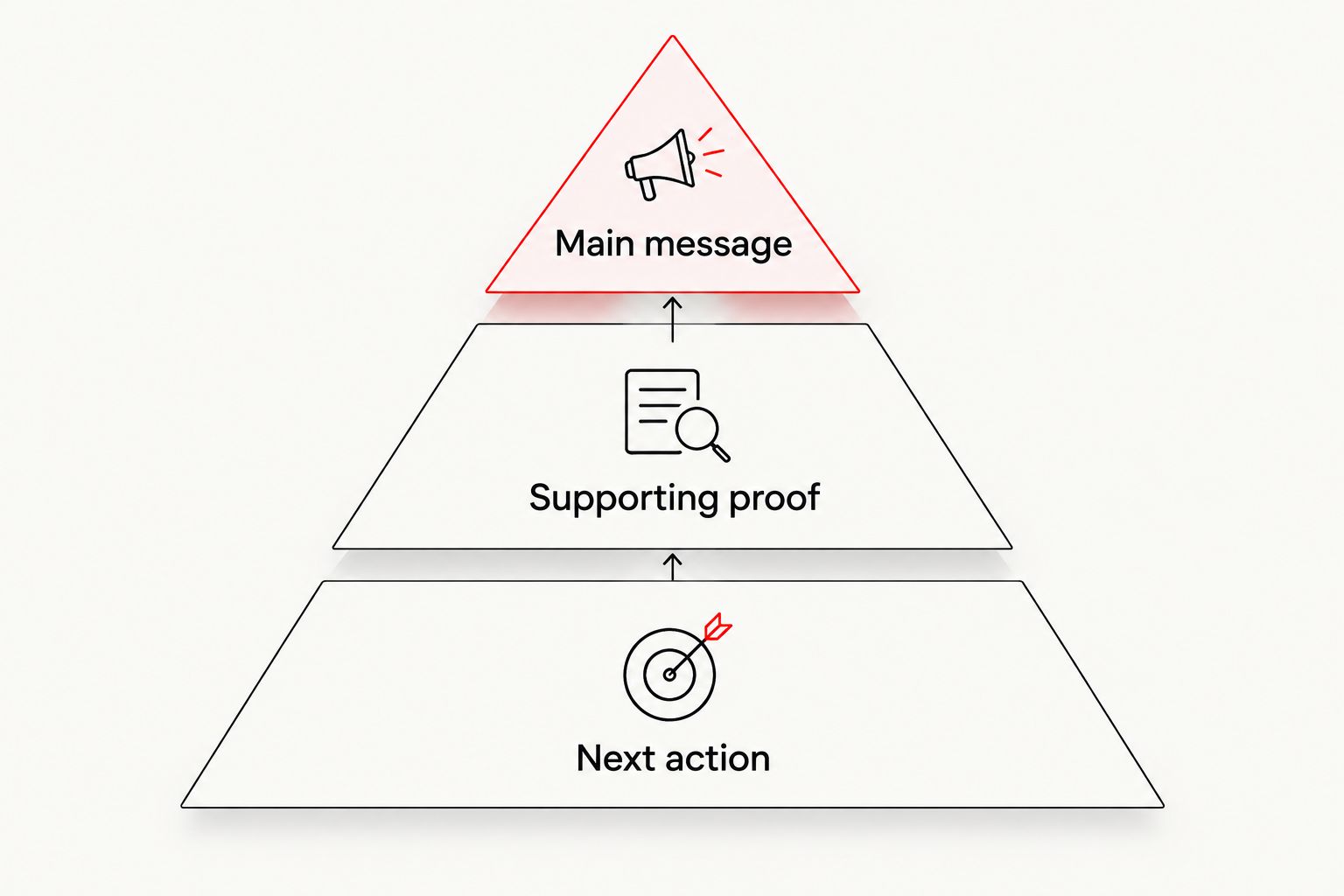
Check the design from 2 viewing distances: the aisle and the conversation area. This is an artwork review exercise, not a fixed distance standard. The aisle view should explain who you are; the closer view can carry supporting information.
For Wilmington contractors and service businesses, keep booth language consistent with your vehicle wraps and lettering. Visitors should encounter the same business name and service description, not competing versions of the offer.
Prepare a quote that answers the practical questions
Image Monster brings over 25 years in business, in-house design and production, and hands-on attention to local print projects. A useful brief gives that work a clear starting point.
Bring the following information before approving your trade show printing:
- Booth dimensions and organizer display rules.
- Required finished sizes and the hardware you already own.
- Event date and the date you need the finished graphics.
- Logo files, approved photographs, and final wording.
- Installation, transport, storage, and removal requirements.
The advantage of local coordination is direct discussion of the actual job. The limitation is that a conversation cannot replace accurate measurements, organizer approval, or final artwork. Bring those details rather than relying on a visual estimate.
When you compare quotes, compare the complete scope. A printed graphic, a graphic with hardware, and a graphic with installation are different deliverables. Ask what each quote includes before making the decision.
Which trade show printing should you choose?
Choose a printed banner as the default, then add another format only when it has a separate job. Select a retractable display for portable setups, a rigid board for explanations, a fabric backdrop for a coordinated wall, or adhesive graphics for approved fixtures.
For 2026 planning, finish the message and support plan before commissioning extra pieces. More printed surfaces do not fix unclear wording. Each graphic should make the booth easier to understand.
FAQ
What's the best large format printing for trade shows?
Printed banners are the best default for a clear primary booth message. Choose retractable displays for portability, rigid boards for explanations, fabric for coordinated walls, and adhesive graphics for approved fixtures.
Is a retractable banner better than a hanging banner?
A retractable banner is better when you need a standalone portable display. A hanging banner suits an approved support location, so choose around your booth layout and setup requirements.
What should I put on a trade show banner?
Put your business identity, a clear main message, and a useful next action on a trade show banner. Move detailed specifications and long explanations to a separate board or supporting material.
Can I reuse trade show graphics for another event?
You can reuse trade show graphics when the message, condition, dimensions, and support system remain suitable. Keep event-specific details off the main graphic when reuse is a priority.
Can adhesive graphics go on a rented booth counter?
Use adhesive graphics on a rented counter only with permission and a confirmed material and removal plan. Share the counter's surface details with your printer before ordering.
What information do I need for a trade show printing quote?
Provide finished dimensions, artwork, hardware details, organizer rules, and your required completion date. Include transport, installation, and removal requirements so the quote addresses the actual job.
Where can I discuss trade show printing in Wilmington, NC?
Discuss trade show printing with Image Monster at 4724 New Centre Dr in Wilmington, NC, or call (910) 313-1154. Bring your booth layout, display requirements, and artwork for a project-specific conversation.
One last thing
Furniture changes what visitors can read. Before approving your artwork, mark the counter, table, and product positions on the layout; move essential wording away from the areas they cover.
The same check applies to photographs of the booth. A graphic that works in isolation still needs to work behind your team and equipment.
Related guides
- Truck lettering styles for local businesses
- Vehicle wrap materials for commercial fleets
- Vinyl banner materials for outdoor signage
- Sign materials for Wilmington storefronts
Ready to plan your booth? Call Image Monster at (910) 313-1154 or visit 4724 New Centre Dr in Wilmington to discuss your graphics and request a quote.